







Share your starting points and goals.
The URL you use now, what should improve, and two or three sites with a design you like. You're welcome to start fresh, too.
Forged websites and redesigns, with 17 years of experience
If you can dream it,
we can build it.
Traditional website craft, built AI-first. We have built websites for 17 years, and we still build on WordPress, Squarespace, and Wix. Unless you need drag-and-drop editing, we no longer recommend them. A Forged Site has no template walls, and it comes out faster, leaner, and harder to break than the plugin-stacked sites that run so much of the web.
Our 17 years are the human in the loop, so you get the freedom of AI without the mess.
Another way to run a website
Most businesses pay three separate bills: one company builds the website, another handles SEO, and a third runs the ads.
A Forged plan pulls the first two into a single monthly price. Paid ads come as an add-on, month to month, with that same team. There's no page builder to learn. An account manager keeps the responsibility for this work.
The URL you use now, what should improve, and two or three sites with a design you like. You're welcome to start fresh, too.
Open the draft on your phone or desktop. Tell us what fits and what should change. This first look doesn't require a contract. If it doesn't convince you, you don't have to work with us at all. If you like it, we'll revise until it meets your launch expectations perfectly.
Revision time is typically less than a day to a few business days, depending on the site and your feedback. Once you're live, your plan covers ongoing care, future improvements, and updates.
The first draft is only a start. Content, function, accessibility checks, and your approval shape the launch date.
Next: Marketing & adsThe marketing, not only the design
A new site happens once. Getting found is monthly work.
Every Forged plan keeps on writing, listing, and reviewing after the launch. That ongoing piece is what a design shop usually hands to somebody else.
DraftDash writes posts about your field, shaped for traditional search and for AI answer engines, the ones people ask first these days (SEO and AEO). Volume tracks your plan: one post each month on Lite, up to a daily pace on Ultimate. You approve every post before publishing, unless you turn auto-publishing on. Catori reviews the search picture for you every month.
Starting with Basic, BrightLocal sends your business details out to the data aggregators that supply maps, directories, and assistants, so the listings stay consistent wherever someone looks. Higher plans reach more networks.
We set up and manage the three platforms for a single flat fee. You won't be waiting on a report that shows up monthly. Your portal puts Google beside Bing and ChatGPT, with spend and leads plus cost per lead refreshed daily. It names the platform with the lowest cost per lead, but only once each platform has enough leads that the comparison is fair.
It's month to month, and there's no term. You can start in any month and stop when any billing month ends. Each month there's a 30-minute meeting for decisions, and we shift budget to what's working.
You pay that ad spend straight to each platform. The accounts are opened in your name, and they stay yours.
Neither a plan nor an add-on promises rankings, a lead count, or any return on ad spend. The promise is the work, done each month, and your portal holds a record of it. Social media management isn't included in Forged.
Next: Plans & pricesPlans and their prices
Five plans. Each one steps further, the way an internet-marketing shop would: how often we write, how often we change the site, and how far the citation networks reach. Page count marks a starting size, not a wall. A 10, 20, 30, 40 or 70 page site: there's a plan that covers it.
Every plan includes a custom build, new site or rebuild, along with hosting, Cloudflare CDN and SSL, site care with MOG, monthly accessibility reviews with Vigil, monthly search reviews with Catori, and a client portal for the audit trail, blog publishing, portfolio work.
Want paid search too? Paid Ads can be added to any plan, priced at $149.99 a month, and it runs month to month. What's included.
Starter site
$79.99/month
A 24-month commitment
A focused website with a monthly post.
Regular content
$149.99/month
A 24-month commitment
Regular writing, AI lead capture, and the first citation networks.
Organic cadence
$224.99/month
A 18-month commitment
A working organic cadence: about ten posts a month.
Marketing desk
$337.49/month
A 12-month commitment
Add Paid Ads and the plan takes on the work a complete SEO and ads agency would do.
Full replacement
$449.99/month
A 12-month commitment
Daily publishing and the largest change-order budget we sell.
Covered page count, by plan, is 10, 20, 30, 40 or 70 pages. It's the starting build, not a lifetime cap.
A site over 70 pages is past the size of Ultimate's starting build. At the start, or later as the site grows, pages past the count on the plan you chose are a change order or $20 each, one-time.
BrightLocal sends your business name, address, phone, and more to the directory networks the plan names, so those listings match.
| What's included | Forged Lite | Forged Basic | Forged Standard | Forged Professional | Forged Ultimate |
|---|---|---|---|---|---|
| Monthly price and commitment | $79.99 / 24 months | $149.99 / 24 months | $224.99 / 18 months | $337.49 / 12 months | $449.99 / 12 months |
| Pages covered | 10 pages | 20 pages | 30 pages | 40 pages | 70 pages |
| Change orders a month | 1 | 3 | 5 | 7 | 10 |
| 5 | 5 | 5 | 5 | 5 | |
| DraftDash blog production | 1 post per month | 4 to 5 posts per month | Around 10 posts per month | Around 20 to 22 posts per month | Daily, roughly 28 to 31 posts per month |
| Ethel lead capture | Not included | Basic: AI-powered forms | Basic: AI-powered forms | Standard: multilingual support and analytics | Professional: adaptive knowledge retrieval and voice |
| BrightLocal directory citations | Citations not included | BrightLocal to Data Axle and Foursquare | BrightLocal to Data Axle, Foursquare, Neustar Localeze and Yellow Pages | BrightLocal across all major | BrightLocal across all , plus 50 extra directories |
| MOG site care, hosting, backups | Included | Included | Included | Included | Included |
| Monthly Vigil and Catori reviews | Included | Included | Included | Included | Included |
| Client portal: audit trail, blog editor | Included | Included | Included | Included | Included |
The page-count rule and the $20 extra-page price are stated just above this comparison, not only inside it. Larger functionality is scoped before any of that work starts.
Citation networks, and what the do, are stated above too. Lite doesn't include that package.
For typical small-to-mid-size business usage, Cloudflare and other included third-party services stay on standard tiers. If your usage needs a paid upgrade, we discuss the additional cost before it's incurred. E-commerce needs a separately scoped build.
We offer these plans through the Idea Forge Studios partnership with IDFS.AI. The prices and allowances here are Idea Forge Studios prices and allowances. Future products such as Thea aren't sold as features that are available in this comparison.
When the extra work shows up
On top of the monthly allowance, every account includes five more change orders, and no extra charge for them. Already with us? Those five are yours too. A lot of work at once, or a busier stretch, is when you add a pack. It stays good for 12 months.
Questions don't cost you. Mistakes we made are ours to fix. Clarify by email and it doesn't spend an order. A correction to our own work doesn't either. We agree on any additional scope before we start.
Typically we can finish one coordinated request in a single pass, and that pass is a change order. Common shapes: three or four new pages. Also six to eight blog or portfolio posts. Also a small piece of new function.
Heavier than one order? We say so before we begin. Even a modest backend on a member login usually starts at three or four, and grows from there. We never open that work and bill you once it's already done.
If you already think in AI terms: model work for that pass is usually around 500,000 tokens, and a human reviews it before anything goes live.
We don't cut a job off at 750,000. When a request is clearly going to need a lot more time and processing (the kind that wants two passes), we'll tell you before we start that it uses two change orders. What we promise is the scope. The number draws a picture of size. It isn't a meter on your invoice. Counts move from one model to another, so we don't sell the token as the unit.
From the day you buy it, a pack lasts 12 months. The five annual orders renew when your service anniversary hits, and they expire at the next one. Monthly orders don't roll over. We spend monthly orders first, the five annual orders next, and a purchased pack last.
Which requests countWhat you handle
client.idfs.ai is part of every Forged account. It's where the work is visible, where you publish the content that should stay in your hands, and where the record of changes lives in writing.
Why Forged?
Ahead of the site you have now, and of that traditional rebuild, the one you were about to pay for. This isn't a visual builder. It's a full stack, and human account managers are still on the wire.

Performance
Forged Sites are built static-first. A visit doesn't send a CMS to ask the database a question, and a plugin marketplace doesn't come along.
Put it beside a neglected Wix site or a neglected WordPress site: a Forged page is usually much faster. Speed and security are the real upgrades, and they're equals.
Images, embeds, and third-party scripts still count. Even with our own code light, a visit still loads a chat widget from another company, or a large photo, a map, or a video embed. Usually that outside load is what sets the speed you feel.

Accessibility
As fully as we can, we build every Forged Site to WCAG 2.2 AA. Vigil re-checks it after that, and your account manager does too, page by page.
Alt text, contrast, heading structure, keyboard paths, and screen-reader support are part of the build. They aren't an overlay added at the end. You land closer to WCAG than a neglected template site would put you.
It isn't a promise that a demand letter can't arrive, and the agreement says so. It is a concerted and honest effort at perfection toward compliance.

Agility
Shift the message, change the keywords, or rebrand a service, and there's no theme vendor or page builder to wait on. You ask for the work. We lock the scope.
During work hours, your account manager reviews any material change. A small, clear update can often land on that same business day. Larger work gets a schedule both sides accept, and a change-order amount.

The real difference
MOG stays on the site. Context, earlier decisions, and the constraints come with it, and then it helps the work get done.
Everyday words are how you say what you want. The result stays our team's to answer for. On the public site there's no dashboard you have to master, no plugins to maintain, and no edit that publishes itself without a review.

Always human
AI handles the heavy lift. The critical path stays with people.
Nothing material goes live on the site until, during work hours, an account manager has reviewed it. You review DraftDash posts, in the portal or by email.
You're never left talking only to an AI. Designers, and people fluent in the code, work with you, answer questions, and keep the quality where it belongs.

Content engine
DraftDash looks up topics relevant to your business and prepares the articles on the schedule in your plan.
Keyword priorities and location priorities can shift, letting you pivot toward the clients you want. Before they publish, you read them by email or in the portal, unless you turn on auto-publishing.
A job photo plus a couple of sentences will make that post beat one written from research alone. Your own voice doesn't arrive on its own. What you have is an active baseline, and you can improve it.

Lead capture
Ethel listens: the visitor says it instead of typing it.
She routes it to the right department, transcribes it, and pre-fills the contact form for the customer. When the customer hits send, she pre-drafts an email for that department, in that department's tone. That is a draft for your team, not an auto-sent reply.
Spam filtering helps. It can't promise every bad message is blocked. She works from spoken audio, which few spam bots can do.
Ethel learns each department's reply style over time. From Basic upward, Ethel is included. Lite doesn't include her.
Meet the agents
The job: keep the site designed, with a compliance eye on it. Play a short video here, or click a name in the plans. Software lifts that work off your shoulders. During work hours, an account manager signs off on material changes to the site. You sign off on posts from DraftDash.
Operations guardian. Context, changes, monitoring, and a record of what went live.
The MOG pageEach month, scans oriented to WCAG and the ADA. People get the findings. Fixes that are ours don't spend your orders.
The Vigil pageSEO, AEO, and GEO, reviewed monthly. Search Console and Analytics, when connected. Recommendations, and not a ranking guarantee.
The Catori pageWriting on a cadence. Researched posts, a schedule, sources, then you approve, in the portal or by email.
The DraftDash pageFront desk. Visitors say it instead of typing it. She routes it to the right department, transcribes it, and pre-fills the form. When the customer hits send, she pre-drafts an email in that department's tone: a draft for your team, not an auto-sent reply.
The Ethel pageKnowledge assistant. Coming soon. You can see the direction because the video is here. She isn't sold yet as an included feature on these plans.
The Thea pageOpen a live site
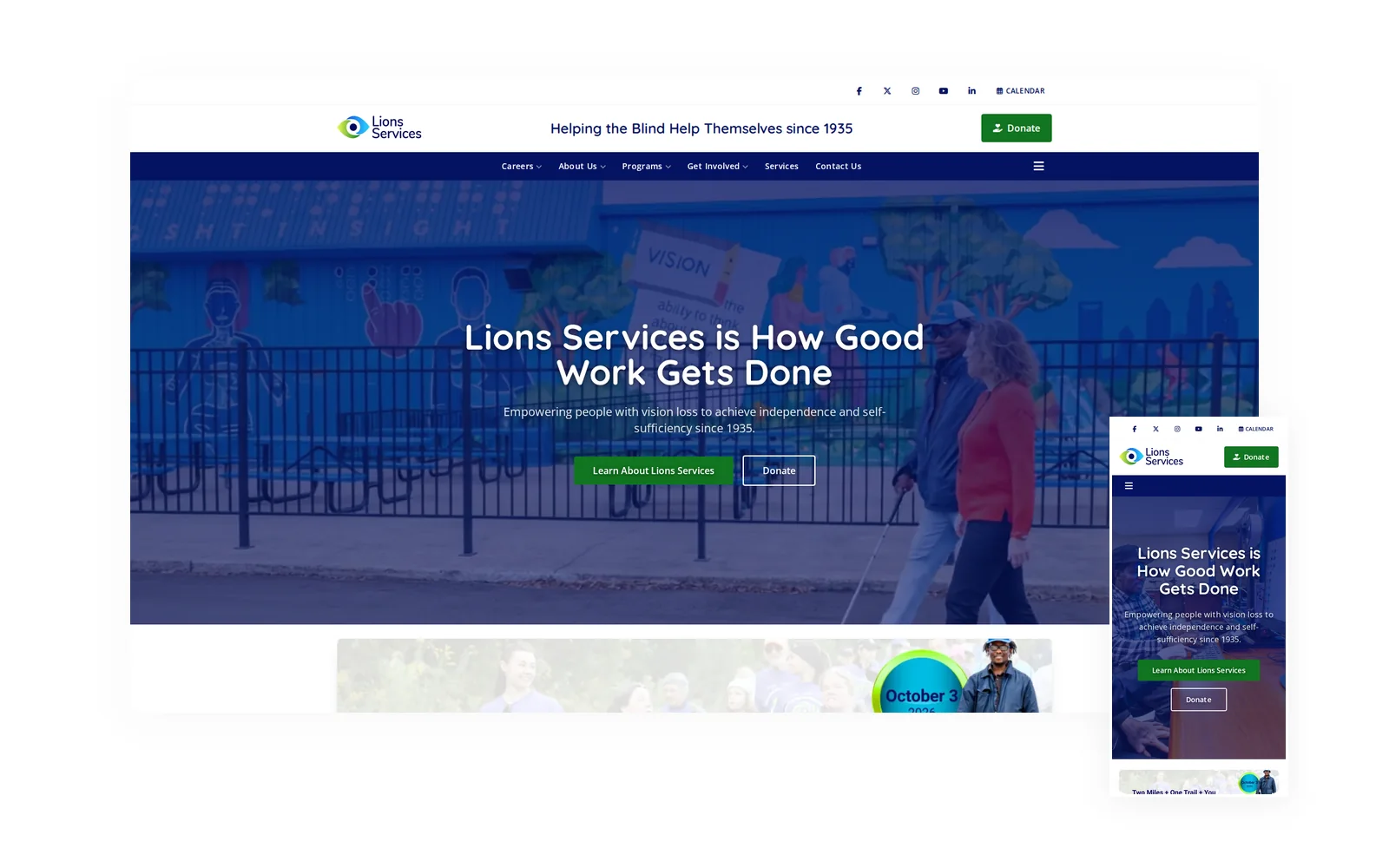
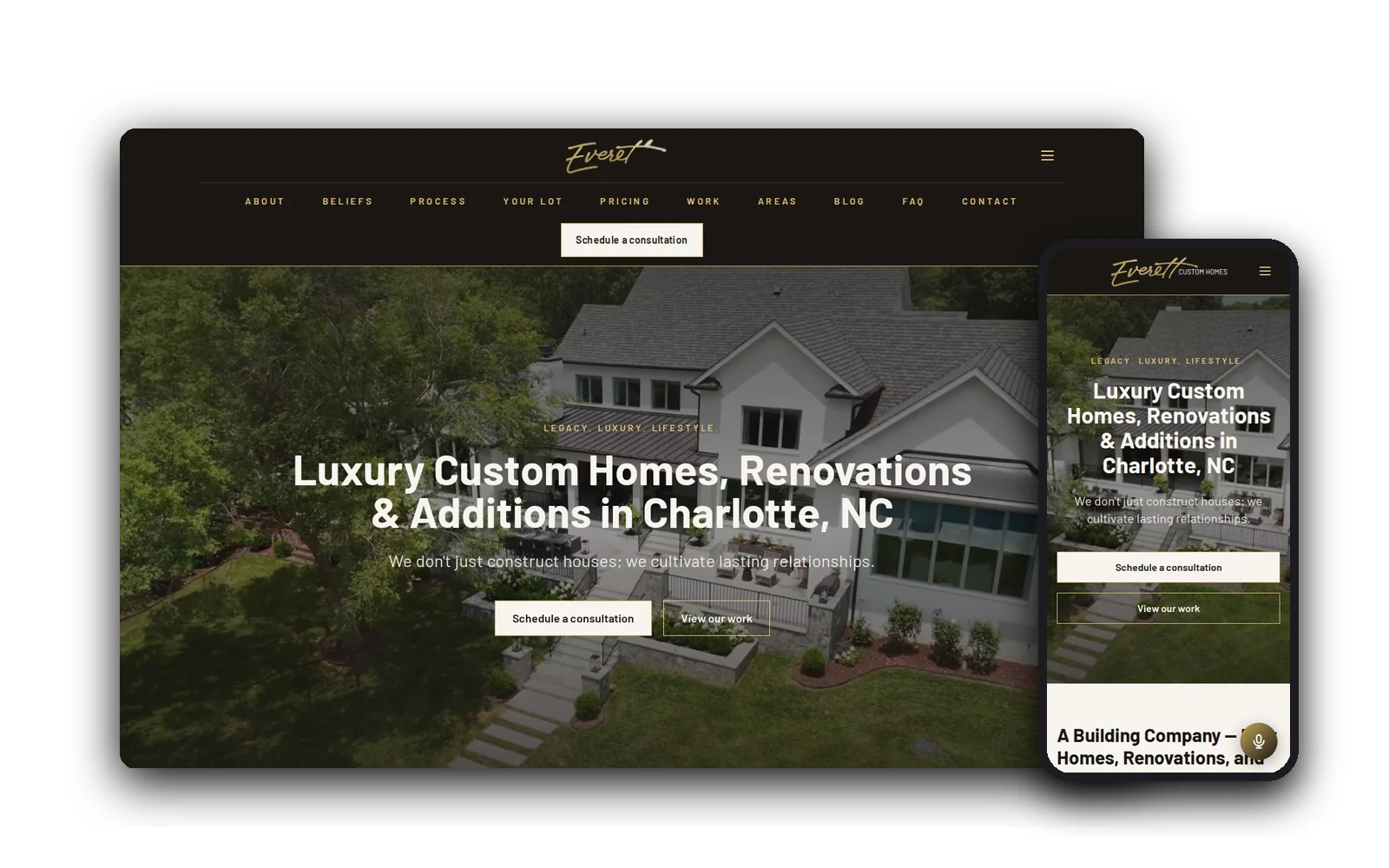
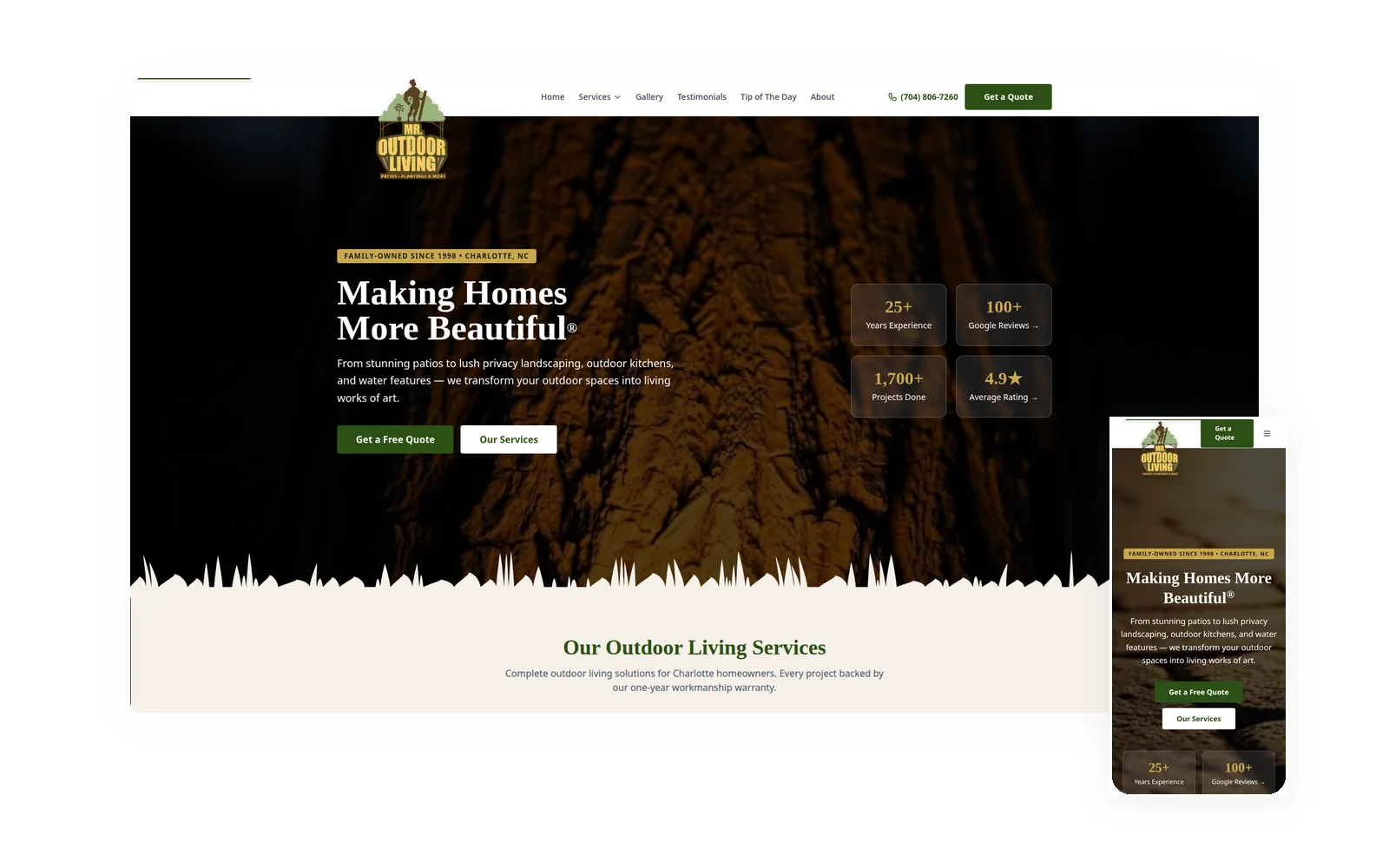
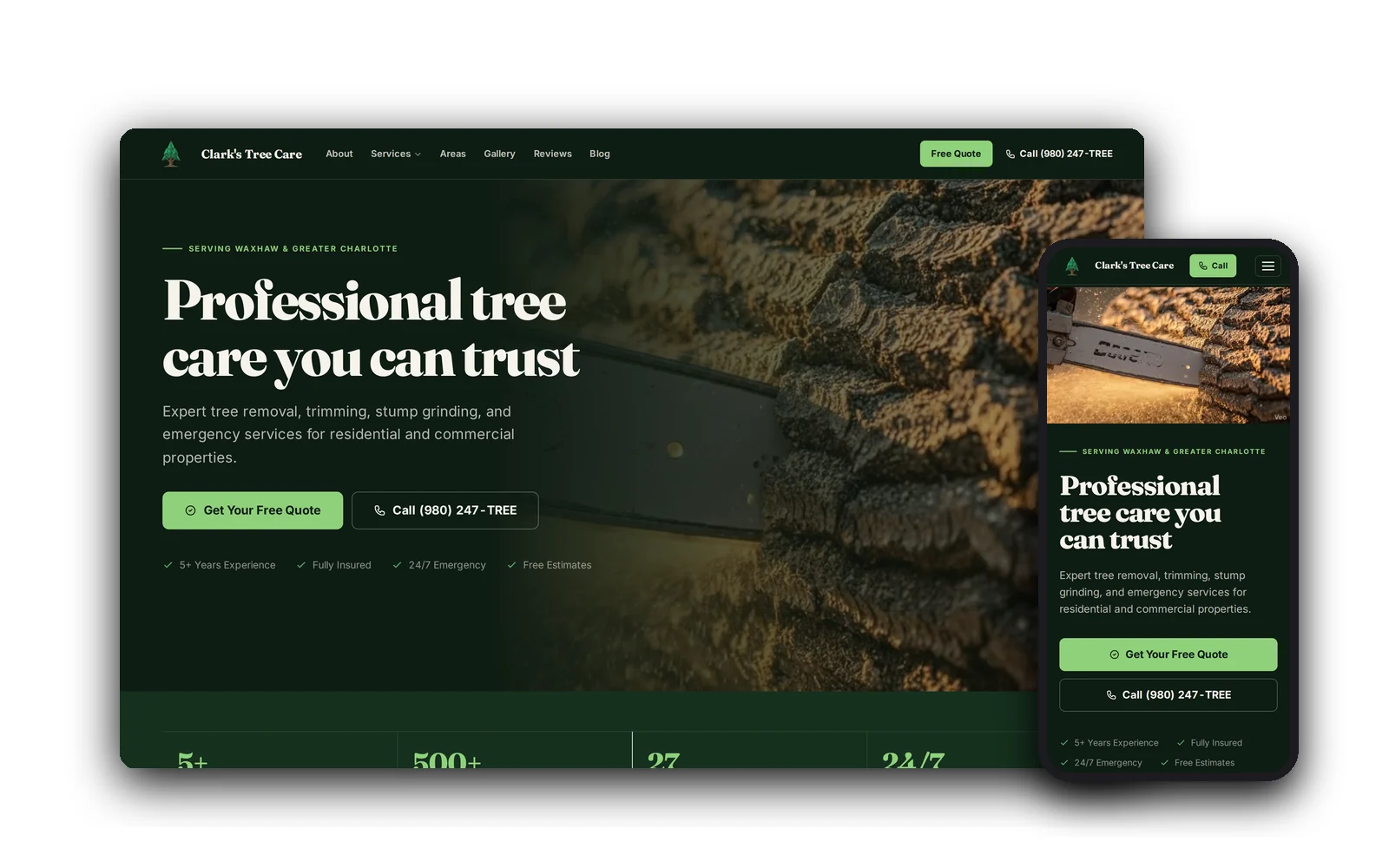
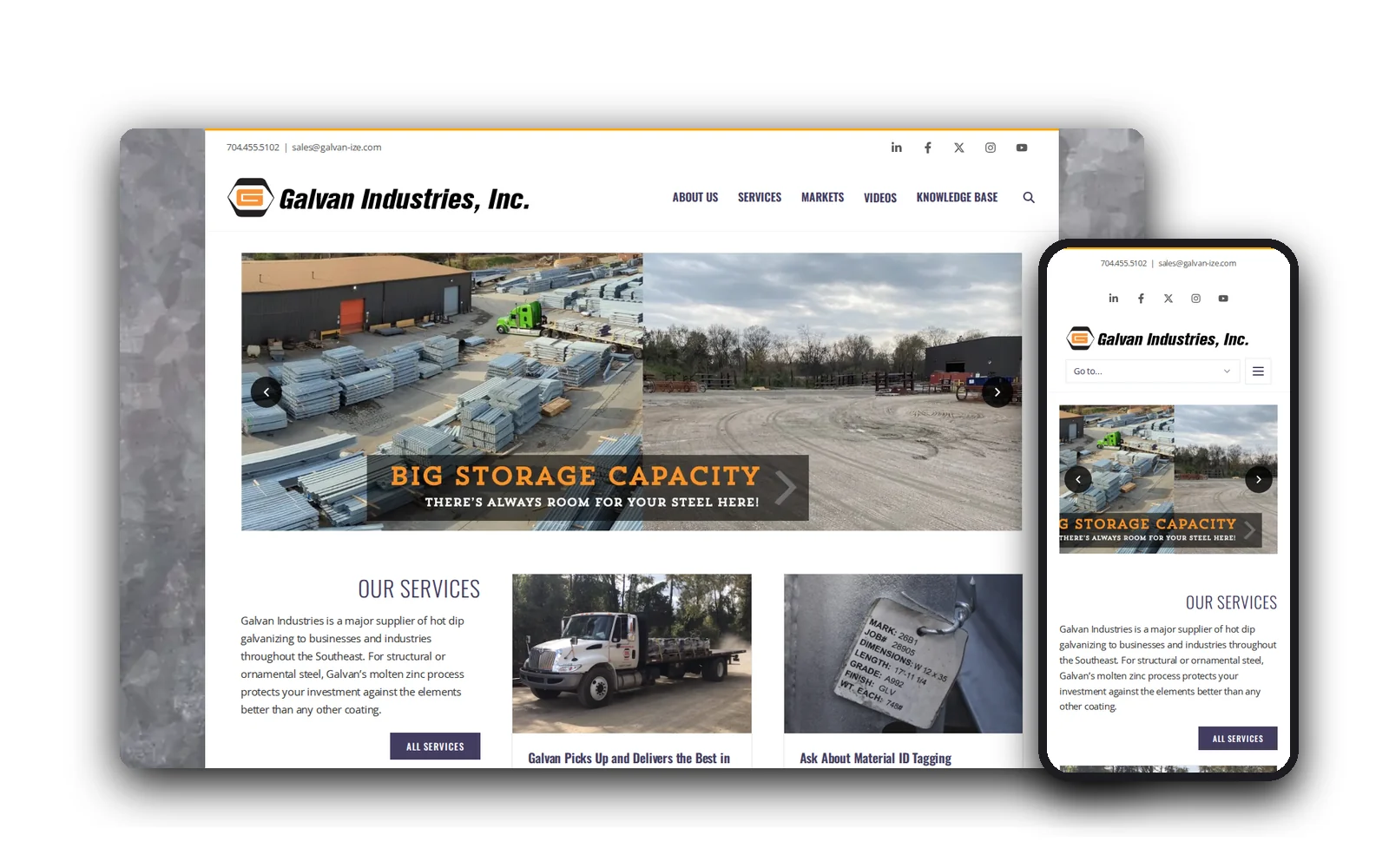
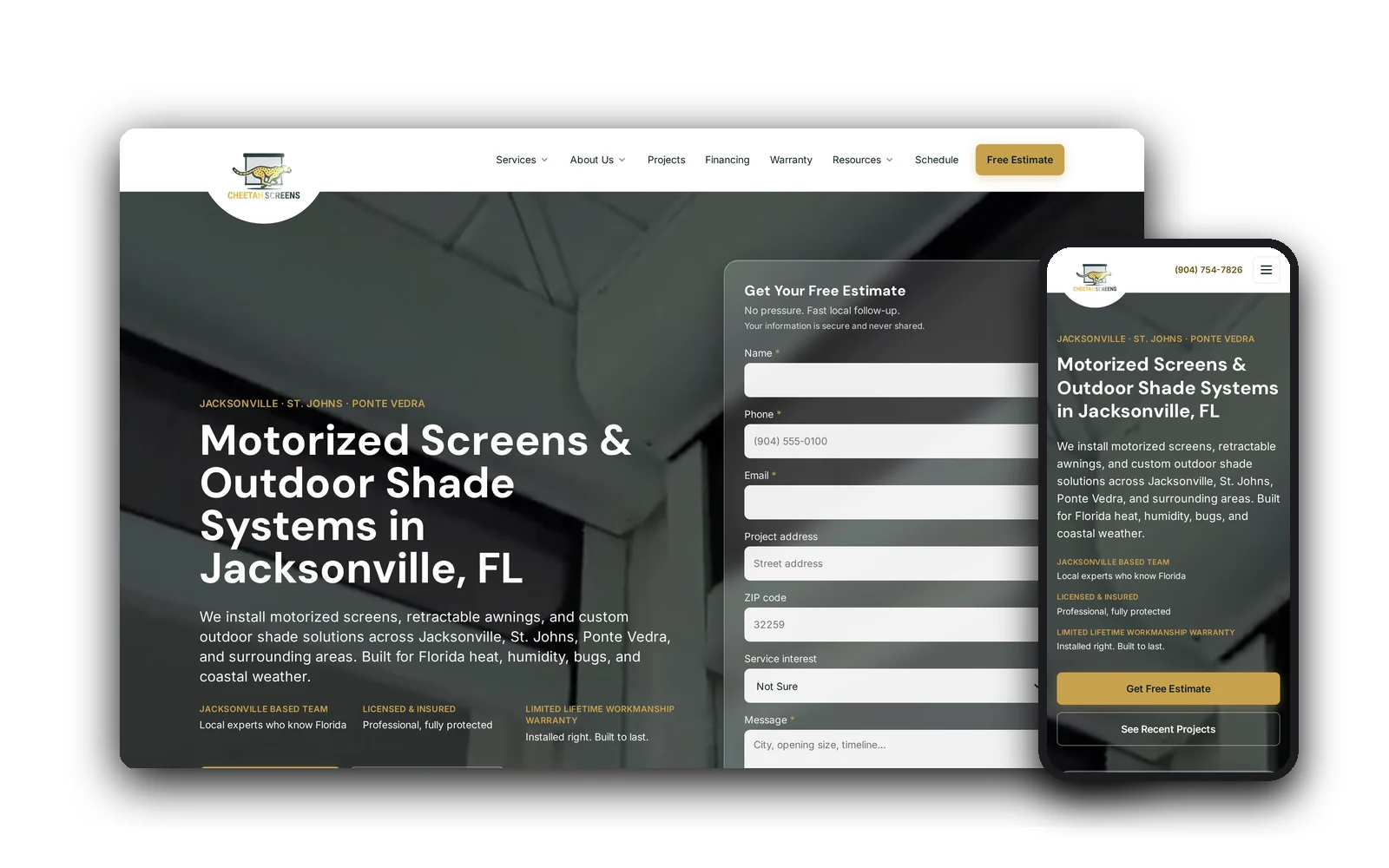
You're on a Forged Site right now. Six live ones sit below. Pull them up on your phone. Run any of them through PageSpeed. A live site and a case study say more than a slogan.
The long version, when you want it
There's a lot behind a simple monthly plan. Open what matters to you, or take every explanation along for a second opinion.
A Forged Site drops the public CMS and the page builder for a codebase we manage. MOG, our AI Site Director, works from the site's context, earlier decisions, and the constraints already in place. It helps carry the work through. Our team stays accountable for the result. An update can be requested in ordinary language. There's no need to recast it as a developer ticket first.
Every plan covers hosting, Cloudflare edge delivery and SSL, site operations, backups, and ongoing reviews. Your client portal is where you look over the audit trail and approve blog posts. For portfolio updates, you ask your account manager. We handle technical upkeep, so you're not the one keeping a stack of plugins current.
You approve blog posts in the portal or by email. Portfolio updates go to your account manager. Core pages (home, services, about, contact, and the rest of the main site) don't let an unreviewed edit go live. That's what holds the site closer to WCAG 2.2 AA: on a main page, a small unreviewed change is enough to break heading order, contrast, labels, or keyboard access. Those pages move by change order, with an account manager review during work hours, on purpose.
We read the request, clear up anything uncertain, and confirm the scope. AI assists during implementation. Material changes get your account manager's review during work hours, before publication. A small, clear update can often be done the same business day. An agreed schedule is required for larger work, unclear instructions, third-party dependencies, or a request outside business hours. Turnaround follows the brief, not how long it takes to press Deploy.
You can request a conversation with a designer or a code-aware teammate. Google Meet and phone calls wait until they're arranged. Bring an emergency straight to us so we can assess it and respond. Routine content and urgent incidents don't share a queue.
We keep the request history and a record of what changed. That lets us look into an issue, put the previous version back when appropriate, and find a correction we owe you. When a miss is ours to any degree, the fix doesn't spend your change orders.
An earlier internal sample of 54 completed changes showed a median turnaround of five minutes, and that figure belongs to a historical internal sample: not a turnaround or response-time guarantee, and not an independent audit. Your request is scoped and timed on its own.
Backups and pre-change recovery points sit in the operating process. Recovery depends on what failed and what has to be restored. A backup isn't a promise that the site can never go offline, or that every recovery is instant.
DraftDash researches topics that fit your business and prepares articles on your plan's schedule. The aim is a useful flow of material that keeps moving when you don't have time to write every week. You get an active baseline you can improve with what only your business knows.
Work that's already yours makes the strongest start. Send a photo from a recent job, a question a customer asked, or a few sentences about a project. We can draft an article from that, grounded in experience you had. Choosing subjects, sending images, checking references, and flagging a topic that misses are all open to you.
AI-assisted drafts don't automatically sound like you, and they don't know a detail you haven't published. Research can be wrong, and so can citations. Our quality checks still run. You review and approve in the portal or by email before anything publishes, unless you turn on auto-publishing. An error in our work is ours to correct.
Volume follows the plan, per month. Lite includes one post. Basic, four to five. Standard, around ten. Professional, around twenty to twenty-two. Ultimate goes out daily, at roughly twenty-eight to thirty-one. That pace is an allowance, not a promise of a particular search ranking or a set number of leads.
Ethel listens. The visitor says it instead of typing it. She routes what she hears to the right department, then transcribes it and pre-fills the contact form for the customer. When the customer hits send, she pre-drafts an email for that department, in that department's tone. The draft is for your team. It isn't sent on its own, and it isn't a commitment made for your company. Depending on the plan, she can also work in more than one language.
She works from spoken audio, which few spam bots can do. Filtering helps cut unwanted submissions. It can't promise every bad message is blocked, or every legitimate inquiry is classified perfectly. Your inquiry records still matter, and so does the follow-up.
Ethel is included from Basic upward, at the levels the full plan comparison lists. Lite doesn't include Ethel. She learns each department's reply style over time. Advanced voice and knowledge features beyond listening, routing, and that draft are specific to the tier and configured with you, not assumed to be on for every site. Where a conventional contact form fits better, we can discuss that option.
The blog supports categories, author details, and RSS. Portfolios and testimonials can give your business's actual work a home next to the researched pieces. Those first-hand materials are worth putting in the brief.
Customers find businesses through Google, maps, directories, recommendations, and AI assistants. Nobody can say with confidence what that mix will be in three years. We design so we can respond when your business changes, or when the channels around it do.
Code is refined for this site's purpose and maintained by the team that runs it. Updating a layout, content structure, or integration doesn't wait for several unrelated theme and plugin vendors to accept one feature. Traditional platforms can change too. The difference is who is responsible for making your change.
Catori supports a monthly review of search visibility and the openings around it. Where your Google Search Console and Analytics access is connected, we can look at page performance, queries, traffic patterns, and conversion paths. Technical findings and content openings go into the report in a form you can act on.
SEO is the work of helping people find you through ordinary search. AEO and GEO describe a different job: how useful, understandable, and discoverable your information is to answer engines and generative search systems. Nothing there guarantees an AI recommendation, a specific ranking, or a sale.
Business details that agree across the directories that matter are one part of a local presence. BrightLocal submits your business name, address, phone, and more to data . Those firms send it onward to many directories, maps, and assistants. Data Axle and Foursquare are networks on these plans, and on Standard and above so are Neustar Localeze and Yellow Pages. Major are covered on Professional and Ultimate, and Ultimate brings fifty further directories. Lite doesn't include a citation package. That BrightLocal page names each network and its cost before a plan takes the network on. A plan that includes BrightLocal gets one submission. Any resubmission, including one to fix a problem with the first run, is a new purchase at your expense unless the mistake was ours, and we confirm the cost first.
This is old-school local SEO, and we won't dress it up as something newer than it is. Research that's current still finds that a directory presence improves the odds an assistant recommends your business. The finding may not last. If it fades, the work we do for you changes with it.
Included upkeep, and a correction of our own work, don't become a new charge just because advice changed. A new page, a campaign, or a feature you ask for may sit on change orders. We'll explain which applies, and we'll agree on the scope first.
Public marketing pages in this architecture don't carry a CMS administration screen a visitor could open, or a plugin marketplace attached to it. The pages can be served without asking a content database a question on every visit. Fewer moving parts on that surface means less to configure, less to maintain, and less to defend.
The choice is architectural. It's not a claim that software dependencies have vanished. Hosting, application libraries, network services, forms, and any connected system still need upkeep. Edge delivery, SSL, and protection features come through Cloudflare. Backups support recovery. A website is still software on the internet.
A client portal, a member area, or a custom records system can have controlled access of its own. That access isn't the path a public page uses to load. We scope the data, the permissions, and the integrations as an application. We don't pretend an interactive system has the same risks as a brochure page.
The trade-off is real. There's no visual builder on the public site for an edit you make yourself without review. You request that work through the managed service. If hands-on editing is what you need most, we should discuss a conventional CMS before you buy.
Fast pages and less complexity help how the site feels. Images, embeds, analytics, and other services still affect how fast a page loads. We optimize the page you actually have, and we measure that page. We don't promise that every third-party script will behave, or that a site can never be compromised.
We work to meet WCAG 2.2 Level AA as fully as possible, and to support accessible use of your site. Automated testing is paired with human review on the criteria a scanner can't settle. This belongs to the build and to the care that follows. It's not an overlay added at the end.
Our aim is clearing the applicable failures in the automated checks we run, then working through the manual items. On that list: keyboard access, meaningful reading and focus order, useful text alternatives, form errors a person can understand, and how interactions behave with assistive technology. Which checks apply depends on what's on the page.
Regular scans, and a review of the findings, are what Vigil supports. Your account manager evaluates the results, works through the items that need judgment, and follows up on issues. When an automated report passes, it covers the checks and the pages that were tested. That pass isn't evidence every possible online tool will come back the same, or evidence every criterion has been met.
When a design you want clashes with an accessibility criterion, we explain the barrier and offer alternatives. If you keep it anyway, we record the decision and the limitation left in place. We keep meeting as many other criteria as we can. An exception stays an exception. Requesting it doesn't make the site compliant.
Your brand matters, and so does how you want the business presented. So does a plain account of what a visual or interaction choice means for people using the site. The aim is an informed decision, and the best accessible result that agreed design can reach.
A Forged Sites plan doesn't come with a 100% WCAG or ADA compliance guarantee, and it doesn't come with legal immunity or a financial guarantee against a claim. Technical testing and human review help identify barriers and help improve the site. Those steps don't decide a legal outcome. Over time, content changes and third-party features can affect the result as well.
Discussions with a law firm are open on a potential partnership for Forged Shield, a higher-priced accessibility protection product carrying a proposed $50,000 guarantee. The partnership, eligibility, coverage terms, and launch date aren't finalized.
Forged Shield isn't available now. The plans on this page don't include a $50,000 guarantee, and they don't include legal protection. Any future offer would carry its own price and its own written terms.
What the W3C says automated accessibility tools can and can't check.
A change order is an agreed piece of work: one complete, coordinated request, not a string of unrelated jobs. Often, one order covers three or four new pages, or six to eight blog or portfolio posts, or a small piece of new functionality. What also fits is a seasonal promotion, a new section, or related copy updates in one package. We agree on the fit before we start. A fully marketed page is a different scale. A page like this Forged Sites page, with its legal pages and contracts, phone and desktop videos with voiceovers, animations, technical data, calls to action, conversion tracking, and the tuning it takes for every major AI model to read it correctly, can take 5 to 10 change orders.
Replies that only clarify the same email request don't each turn into another order. The person confirming the work sets the agreed scope. If several orders are required, we'll say how many and why before the work begins. A membership system is never one change order: even a member login with a modest backend usually starts at three or four, and grows with the features and data it shows. That work can be split across the monthly allowance, the annual five, or a pack. We don't start heavy work and bill it after the fact.
If you're already thinking about this as AI work, a typical change order is usually around 500,000 tokens of model work, plus a human who reviews it before anything reaches your site. A job that runs to 750,000 isn't one we stop. If a request is clearly going to need a lot more time and processing (the kind of job that wants two passes), we'll tell you it will use two change orders before we start. The promise is the scope. The number is a picture of size, not a meter on your invoice. Token counts move from one model to another, which is why we don't sell tokens as the unit.
A question we can simply answer is free. Corrections to our own work, typos, broken links, and issues we caused aren't billed against your allowance. A genuine research or development investigation can be a change order, but we ask before it starts. What comes back should be an answer and a practical plan for what comes next.
Monthly orders are used first, then the five annual orders, then a purchased pack. While it's valid, a pack locks that allowance's price. It's prepaid work for when you need it, not unlimited labor for a year. Ask the team to add a pack. We'll confirm the purchase and the expiry with you.
A MOG chat work session that you open directly can consume a change order at the start. Before a chargeable session opens, the portal explains that. Emailing a question is a separate case, and the same protection still applies when the work is correcting a mistake of ours.
New pages can be scoped through orders, or bought for $20 each, one-time. More substantial custom functionality may need several orders, or a scope of its own. You get the choice before that work is committed. If a request is clearly going to take more than one order, we'll say so up front and wait for you to decide.
Sometimes a site needs a quote flow, an events directory, a member area, or a small records system. Sometimes it needs to connect with software you already use. We start from the real process and scope the part that's missing.
Where a CRM, a scheduling system, or a business application is already working well, connecting it may make more sense than replacing it. A small custom component, where it fits better, can sit beside the site with the appropriate access controls and data model.
It costs nothing to ask what's possible. A real investigation that needs development work is scoped as a change order, and only with your agreement. You get the answer back, plus a build path and an estimate of the work, rather than a research question quietly turning into a project.
We can't promise an integration without checking the other system's capabilities and its access requirements. A third-party subscription, or a usage cost, stays separate unless it was specifically included. A substantial application needs a scope of its own.
These plans don't include an e-commerce store with a shopping cart, inventory, and checkout. We also build on WordPress, WooCommerce, Shopify, and other platforms when one of those fits the business. Should you need a traditional CMS or a store, we'll explain the fitting build and price it separately.
The initial working draft is there so you can assess the direction before a contract is accepted. Before the site goes live, either party can decide not to proceed, and no buyout applies. You aren't charged a monthly fee until the site is live. If you don't proceed under that arrangement, we absorb the initial build work.
Your own photographs, copy, logos, and trademarks are always yours. The agreement lets us use them as we build the site and make images for it, with AI tools where the work needs them. Design and marketing are real work, paid monthly instead of up front, which is why there's a term. During the term, while the build is being paid off through the plan, the hosted site and the marketing stay with us, licensed to you. The build is protected by the license during the term. Every plan includes a custom build, whether the job is a new site or a rebuild. Rebuilding an existing site is included. There's no separate design invoice for that build, because the design, the AI tokens, and that cost are carried inside the monthly arrangement. The commitment is what pays for that unpaid build. Leaving early after launch therefore carries an agreed buyout, and that buyout reduces as the term progresses. Starting with no existing site is still a custom build, but it may cost more, quoted up front, because with no existing structure there's more planning to do together. Each plan's formula, cap, and worked examples are in Section 8 of the standard agreement (PDF).
You keep the website and the data it has collected, as an export you can move to another system: page templates and generated HTML, design assets and media from the site, a current snapshot of relevant database content, and deployment instructions. Exporting the site doesn't add a separate fee. What doesn't come with you is the marketing services and the AI structure: the continuing AI systems, SaaS tools, and frameworks, as running services.
After the commitment ends, the agreement converts to month-to-month at the plan's monthly fee. You can cancel on thirty days' notice, and there's no buyout. If you prepaid at a discount, the monthly price that continues is the standard plan fee, without that discount. Your account's exact terms are the ones in the agreement.
A conventional project-based build is also available, at its own price, without this subscription commitment. Ongoing AI services aren't bundled into that alternative unless they're purchased separately. We can show both approaches to you.
Included hosting and third-party services cover typical use for a small-to-mid-size business. Unusual traffic, bandwidth, or resource demand may require additional paid capacity. We discuss any such upgrade, and its cost, before that cost is incurred.
This summary is written in plain language. Before you commit, review the standard Idea Forge Studios agreement for Forged Sites (MSA IFS-1.2.3) and ask us about anything that isn't clear. For your account, the signed agreement is the controlling document.

A clear agreement, with the way out
Your photos, copy, logos and trademarks stay yours. The agreement lets us use them, branding included, to build the site and make images for it, with AI tools where that work needs them.
While the term runs and the build is paid off through the plan, the hosted site and the marketing stay with us, licensed to you. That license is how the build stays protected.
When the term is complete, or after the agreed buyout, you keep the website and the data it has collected, as an export you can move to another system: HTML, design assets, media and deployment instructions. There is no separate export fee. What doesn't come with you is the marketing services and the AI structure: the continuing AI systems, SaaS tools and frameworks as running services.
Design and marketing are real work, paid monthly instead of up front, which is why there's a term. The design build, AI tokens and cost, sit in that monthly plan.
Once the term ends, it continues month to month on the same plan and price until you tell us otherwise. You can cancel that with thirty days' notice. To cancel, email admin@ideaforgestudios.com. Moving your site somewhere else doesn't cancel it.
We'll confirm anything still due under your term or buyout. That math is in the agreement. It's not hidden in a later conversation. See the standard agreement (PDF). The buyout formula is Section 8, with worked examples for each plan.
Goodwill, before a contract
Share the site you have and the direction you want. Name a few other sites and what draws you: layout, atmosphere, colors, or storytelling.
Send the brief. The rough draft comes back before a contract, and that is the proof. You get it in one business day. Run it through third-party tools and prove it to yourself. Then set up a Google Meet, and we can make the draft a reality.
After that, we refine it with you. Revisions and launch normally take a few days to a few weeks, depending on size, functionality and feedback.
A brand new business with no website yet still gets a first draft. You're on the same turnaround as everyone else. The draft comes out rougher, since we only know what your request included. You see layout and structure suited to your field, but no content about you. Don't judge it on content. Dentists get a good dentist's site, which is not your practice yet. Take the draft with a grain of salt. Once it arrives, we arrange your first 30-minute virtual meeting, at no cost, before any contract. We find out your goals there, plus what makes you different. We build the real site from there.
Start with a Google Meet, a phone call, or email. We'll contact you to arrange the next step. Sending this form doesn't book an appointment, accept a contract, or authorize a charge.
Reviewed September 22, 2026. Service terms come from the agreement you sign. Sample: Idea Forge Studios MSA IFS-1.2.3 (PDF).