








Small Business Website Design: How Many City Pages
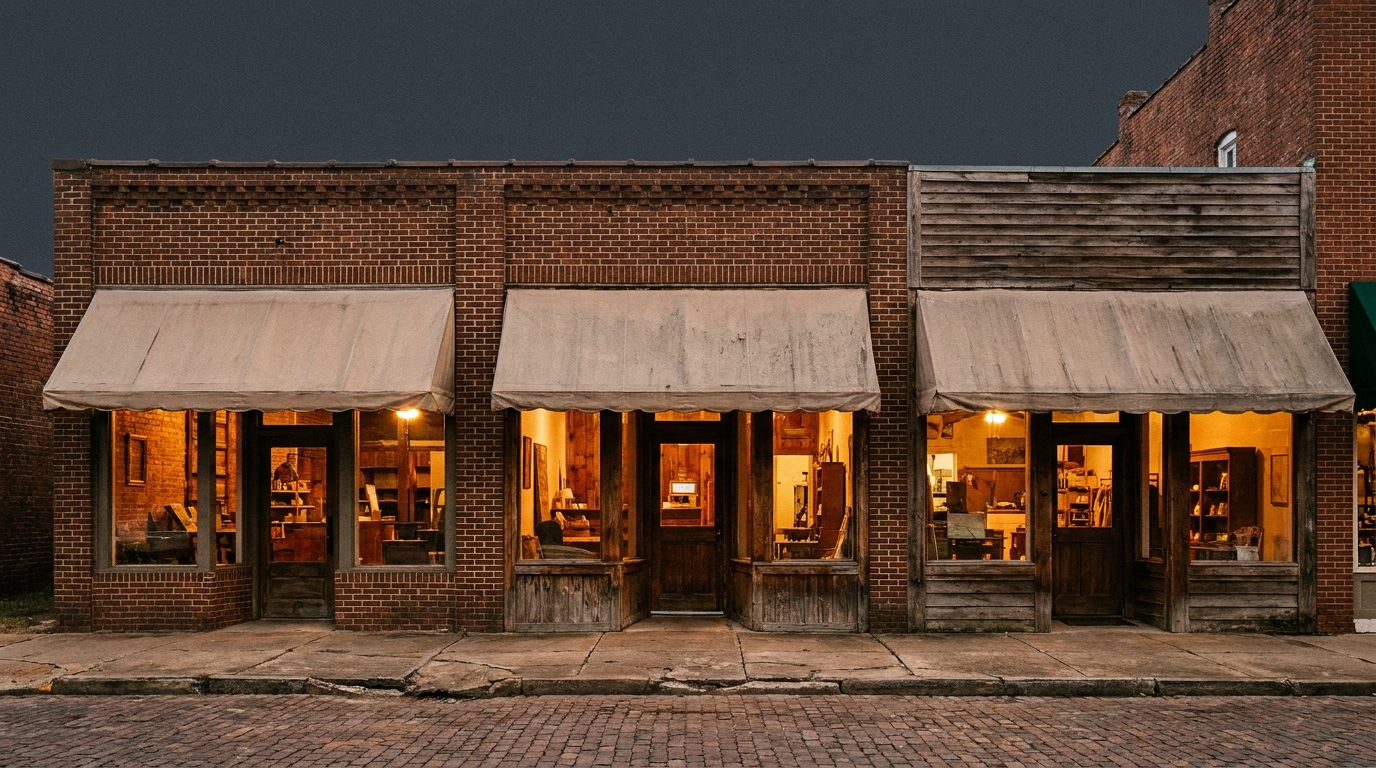
There is no fixed number of city pages a small business website needs. The count should follow the business you run: one shop, one service area, or several real locations. A small business website design that only swaps a city name onto the same page is the failure mode, not a plan. Google's current spam policies describe doorway abuse as pages created to rank for specific, similar queries, which then lead people to an intermediate page that is not as useful as the final destination [1].
Match the page count to the business you run
You have one shop, and customers come to you. You may also travel. The site needs one page for that shop. The towns you will travel to can sit on the same page, in the words you would use on the phone.
You go to the customer, and you do not want the public visiting a base. Google's Business Profile documentation calls that a service-area business: the work happens at the customer's location, and the profile describes the area served [6]. Customer-location only means service in the surrounding area, not at the business address. The other case is service at the address and in the surrounding area [6]. One page can say which is true.
You have a second shop, a separate crew with its own phone and hours, or an offer that is actually different in one place. That difference can deserve its own page, because the caller needs a different answer. Pasting the first page and changing the town does not create it.
A company based in Charlotte might also take work in Raleigh, Asheville, and Philadelphia. That is the kind of region one firm might serve. It is not four businesses unless a real location, a real crew, or a distinct offer sits in each place.
The failure mode is a copied page
Google's spam policies, last updated in 2026, describe doorway examples that match a stack of city pages: pages aimed at cities or regions that funnel people to one page, pages built to push visitors into the usable part of the site, and substantially similar pages that look more like search results than a site someone can browse [1]. If only the city name changes, the person who wanted hours, the crew, or a straight answer on travel still has to click onward.
Those policies also treat blocks of text that list cities and regions as keyword stuffing [1]. Write the area in sentences. A footer of town names, with no fact about any town, is that kind of block [1]. Scaled content abuse is many pages made mainly to manipulate search rankings rather than to help someone, usually unoriginal and of little value, including pages from generative tools that add nothing for the reader [1]. Swapping the city name with a tool is the same choice as doing it by hand.
Google states that sites which violate these policies may rank lower or not appear in results at all [1]. That is a policy statement, not a forecast, and not a promise that a cleaner site will show in any particular place.
A post dated March 16, 2015, which Google still publishes, asks whether a page only funnels people into the real part of the site, whether it repeats a location list the site already has, and whether it is an island reached by links made for search engines [2]. The current definition is the spam-policy page [1].
What counts as a different page
Some repeated content is normal. Google says duplicate content is not, by itself, a spam-policy violation, but the same content on many URLs is a poor experience because a person cannot tell which page is the right one [4].
During indexing, Google looks at the primary content [4]. Pages that seem the same, or whose main content is very similar, are clustered, and Google selects the most complete and useful URL as the canonical [4]. Copies are crawled less often, to reduce the load on the site [4]. Redirects, a sitemap, and a rel="canonical" link are hints, not a rule, and Google may choose a different URL than the one you name [4].
Clustered pages need to be sufficiently different, and they separate faster when the difference is clear and significant [5]. Even after a fix, Google says it might keep pages clustered for up to two weeks [5]. Swapping a city name is not a clear difference. A second shop with its own address, hours, and crew is. Cover the city name. If the page could be any town, it is a label.
When a second page is earned
Add a page when one page would mislead someone: another address, other hours, another phone, a crew on a different schedule, or an offer the first shop does not sell.
Google's local business guide says to define each location as a LocalBusiness [7]. The required address is the physical location, and the name is required [7]. The url is the fully qualified URL of that specific location, and it has to be a working link [7]. The guide says the markup may make more sense on a page about the business [7]. Do not invent a street address for a town you do not occupy.
The Business Profile storefront address should be set only for a business with a storefront, not for a customer-location-only listing, and a value entered there is discarded [6]. The service area is separate: where you work at the customer's location, described as a set of places [6]. That reference caps the field at a maximum of 20 place entries [6]. Twenty limits the profile. It is not a page count, and it is not a target.
A department with its own hours or phone can be described apart from the main store [7]. A town name is not a department. When the place is real, use a working URL for that location rather than one generic URL for the brand [6][7]. A changed offer can deserve a page too, such as installation in one place and repair-only in another. If hiding the place name hides the offer, the page was about the label.
One page when the work does not change
Same people, same offer, same phone: one service-area page. Say where you are based, whether customers come to you or you go to them, and where you stop, including limits such as a county line or travel days [6].
Google's people-first guide asks whether a customer would find the page useful on purpose, whether they will leave knowing enough to do what they came to do, and whether the page was made mainly to attract search visits [3]. A copied city page fails the first two and matches the third [3].
The extra pages still cost time: writing them, keeping every phone number current, and answering someone who drove to a town with no shop.
Do not copy the country-site pattern
Google's multi-regional and multilingual guide is a different job: more than one language, or a site aimed at different countries [8]. Its examples are a Canadian business in English and French, and a manufacturer shipping to Canada and the United States [8]. For languages, it recommends a separate URL per version, because a crawler may not see text that appears only after a cookie or a browser setting [8]. English pages that differ by city are not that project.
Google says it ignores locational meta tags and geotargeting HTML attributes, so a hidden city tag does not make a page local [8]. Signals it may use for a country audience include addresses and phone numbers on the page, local language and currency, links from other local sites, and a Business Profile where one exists [8]. Those describe a presence you have, not an address printed in every town you might drive through.
Put real pages where people can find them
If the page is missing from the menu, it fails the 2015 island question: a doorway can be hard to reach from the rest of the site [2]. Put a real location in the navigation.
When pages are linked properly, Google can usually find most of a site [9]. Proper linking means every page you care about is reachable from the menu or from links on other pages [9]. The sitemap guide calls a site small at about 500 pages or fewer that you want in search results, and it says a small, well-linked site may not need a sitemap, while a large or complex site still can [9]. Link the real locations. Do not publish a page per town and hope a file explains the pile.
The profile is a separate step. After you verify ownership, you can edit the address, contact info, business type, and photos, which is how those facts can show on Maps and in the knowledge panel [10]. The location name should be the real-world name on the storefront, the website, and your stationery, not a city list or a tagline [6]. Keeping the name, address, and phone consistent on listings is a different job from choosing city pages. We cover listings on our citations and local SEO page.
If the copies are already up
Keep the URL that tells the truth. Rewrite the others until the city name is not the only difference, or stop treating them as separate pages. Redirects, sitemaps, and a rel="canonical" link are signals Google may still override [4]. Do not change the date on a page you did not really change. Google lists that as a warning sign, and says adding or removing a lot of content mainly to seem fresh will not help [3]. A footer of old city links, and nothing else, leaves the island problem in place [2].
Decide without a quota
Before a new city page, ask whether the site already explains the place, the crew, or the offer, whether a customer could tell the pages apart with the city name covered, and whether the menu leads to the phone or shop that answers. A page you cannot reach, or the same page published many times, is the doorway pattern [1][2].
Stop when the real differences run out. One service-area page is a full answer for many businesses. One page per real location is a full answer when those locations exist. There is no magic number after that. One shop should not pretend to be a chain, and several real locations should not hide in one vague paragraph.
Practical takeaways
- Count shops, crews, and distinct offers, not towns you are willing to drive to.
- A copied city page matches Google's doorway examples, including pages that pass people along to one real page [1].
- Use one service-area page when the people, the offer, and the phone number stay the same [6].
- Give a second page to a second place, or to a department with its own hours or phone, and point that profile at that page [6][7].
- Do not invent a street address. Describe a service area instead [6].
- Link kept pages from the menu [2][9]. Merge or rewrite thin pages. Grouping can lag the edit by as long as two weeks [4][5].
How we can help
We are a Charlotte web design company, and a small business website design should match how the business actually works, whether that is one shop, a service area, or several real locations. That is the work we do, and you can see it on our web design page. Our view is that a site built for one business beats a one-size-fits-all builder for most companies, and that WordPress, Shopify, or a builder is the better fit when the business already runs well on that kind of tool. Have more questions or want to get in touch? Reach us through our contact page, call (980) 322-4500, or email [email protected].
Citations
- Google Search Central, "Spam policies for Google web search" (2026-08-28)
- Google Search Central Blog, "An update on doorway pages" (2015-03-16)
- Google Search Central, "Creating helpful, reliable, people-first content" (2026-10-05)
- Google Search Central, "What is canonicalization" (2026-08-20)
- Google Search Central, "Fix canonicalization issues" (2026-08-21)
- Google Business Profile APIs, "REST Resource: accounts.locations" (2026-10-30)
- Google Search Central, "Local business (LocalBusiness) structured data" (2026-09-08)
- Google Search Central, "Managing multi-regional and multilingual sites" (2025-12-10)
- Google Search Central, "Learn about sitemaps" (2025-12-10)
- Google Search Central, "Add Business Details to Google" (2025-12-10)