
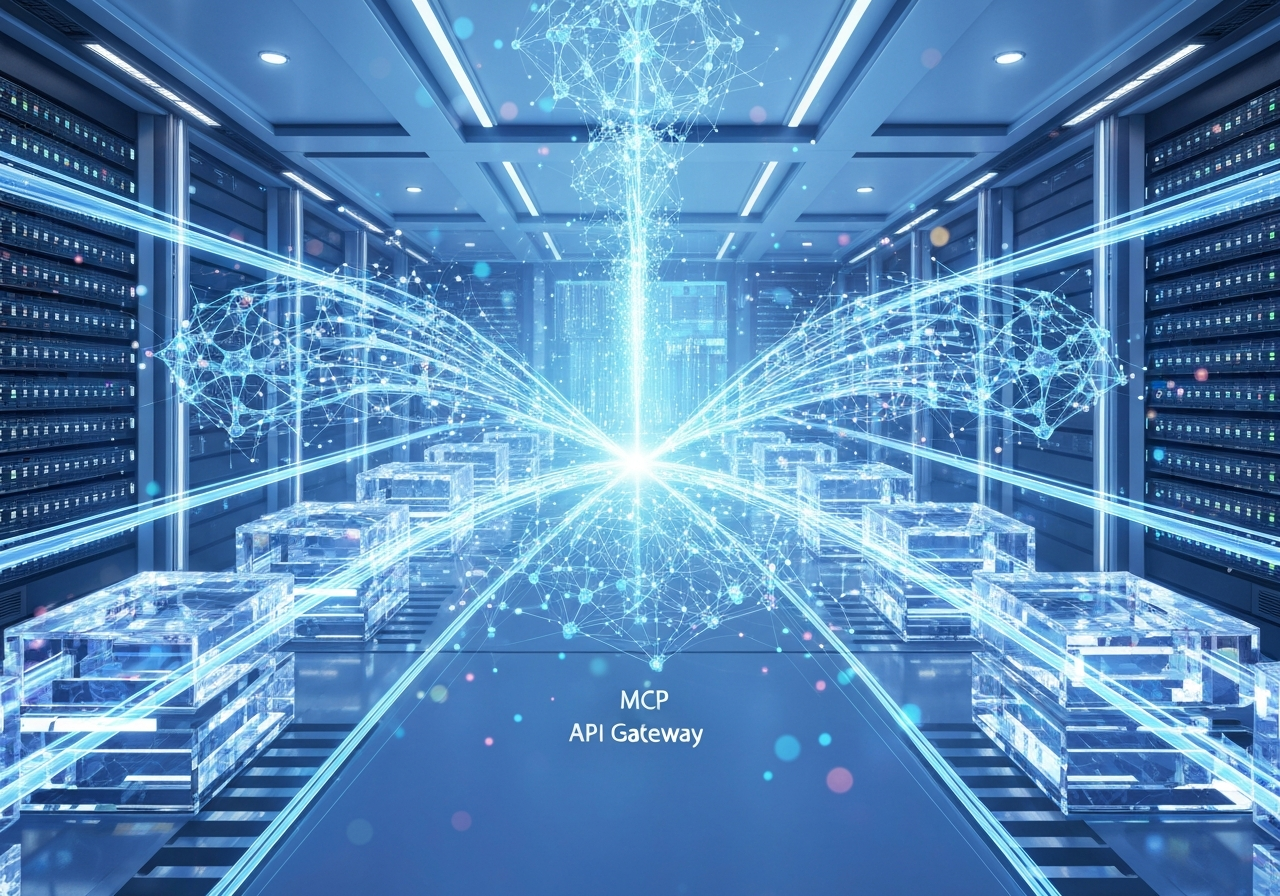
Introduction: Bridging Traditional APIs with the Future of AI
In the rapidly evolving landscape of artificial intelligence, the ability for AI agents to seamlessly interact with existing software systems is no longer a luxury but a necessity. This crucial integration is often hindered by the “N x M problem,” where a multitude of AI clients (N) and disparate APIs (M) necessitate custom, one-off integrations, creating a complex and unsustainable web of connections. This is where FastAPI-MCP emerges as a game-changer, providing an elegant and efficient solution. It acts as a standardized communication layer, a true “USB-C port for AI,” enabling AI agents to effortlessly discover, understand, and utilize the functionalities of your FastAPI applications. By adopting FastAPI-MCP, businesses in Charlotte, NC, Raleigh, NC, Philadelphia, PA, and beyond can future-proof their digital infrastructure, ensuring their services are readily accessible to the next generation of intelligent automation.
The Evolution of AI Workflows: Why Seamless Integration Matters
AI workflows have dramatically evolved from simple, reactive models to sophisticated, agentic architectures. Today’s AI agents are designed to plan, reason, and autonomously execute multi-step tasks by interacting with external tools and data sources. This shift demands a standardized and reliable mechanism for AI to interface with the vast ecosystem of enterprise APIs. Without seamless integration, the full potential of AI automation remains untapped, leading to fragmented processes and significant development overhead. The challenge lies in enabling AI models to not just process information, but to actively participate in and orchestrate complex business operations, from querying databases to updating CRM systems. The Model Context Protocol (MCP) provides this foundation, and FastAPI-MCP offers a direct pathway for Python-based services to join this AI-native paradigm.
Understanding FastAPI-MCP: Powering AI Agents with Existing APIs
FastAPI-MCP is an innovative, open-source library that empowers Python developers to transform their existing FastAPI applications into AI-ready services with minimal effort. At its core, it’s a zero-configuration solution that automatically exposes your FastAPI endpoints as Model Context Protocol (MCP) tools. This means AI agents can interact with your APIs in a standardized and self-describing manner, eliminating the need for extensive custom code or manual tool definitions. The library intelligently identifies all available FastAPI endpoints, converting them into MCP tools while preserving their original schemas for requests and responses, as well as any existing OpenAPI or Swagger documentation. This preservation is critical, as it ensures that AI agents can accurately understand parameter types, constraints, and the overall purpose of each tool, just as a human developer would. As noted by InfoQ, this approach significantly simplifies the process of making web services accessible to AI systems, marking a “huge win for devs looking to productionize tools quickly without rewriting everything.”
The beauty of FastAPI-MCP lies in its FastAPI-native design. Unlike generic OpenAPI-to-MCP converters, it integrates directly with FastAPI’s ASGI interface. This direct communication eliminates the overhead of internal HTTP calls, leading to more efficient performance. Developers can mount the MCP server directly within their existing FastAPI application, creating an accessible `/mcp` endpoint, or deploy it as a separate service for greater architectural flexibility. Key features include built-in authentication, leveraging existing FastAPI dependencies, and automatic preservation of detailed endpoint documentation, making it a robust choice for businesses seeking to enhance their AI integration strategies without disrupting their current infrastructure.
The Strategic Edge of Agentic Automation and the Model Context Protocol (MCP)
Agentic automation, driven by advanced AI agents, is poised to redefine operational efficiency and innovation for businesses. These autonomous agents, capable of complex reasoning and tool utilization, require a universal language to interact with the myriad of software services. The Model Context Protocol (MCP), introduced by Anthropic, provides precisely this. It’s an open standard designed to enable AI models to seamlessly discover, understand, and act upon external data sources and tools. MCP defines how applications provide context to large language models, allowing for:
- Tool Invocation: AI agents can call structured tools with defined arguments, executing business logic within your services.
- Schema Discovery: Agents can query available tools and their metadata, with FastAPI’s automatic schema generation providing this information.
- Error Handling: Structured error information allows AI agents to interpret and respond to failed operations intelligently.
This standardization eliminates the fragmented integration challenges that previously plagued AI development, fostering an interoperable ecosystem where any MCP-compliant client can communicate with any MCP server. The strategic advantage for businesses adopting MCP, particularly through a streamlined tool like FastAPI-MCP, is immense. It transforms existing APIs into “agent-operable” assets, unlocking new possibilities for automation, data processing, and innovative AI-driven services across various sectors. For companies in Philadelphia, PA, and across the Carolinas, this means a competitive edge in leveraging AI for growth and efficiency.
Transformative Use Cases: How FastAPI-MCP Fuels Next-Gen AI Automation
The practical applications of FastAPI-MCP in driving next-generation AI automation are far-reaching, enabling businesses to unlock transformative capabilities across various domains. By allowing AI agents to directly interact with existing APIs, FastAPI-MCP facilitates sophisticated workflows that were previously complex or impossible to implement. Consider these compelling use cases:
- Conversational Documentation: Imagine an AI agent that can guide developers through complex APIs by interactively calling endpoints and explaining their functionality. This significantly improves developer experience and accelerates onboarding.
- Internal Automation: AI agents can automate routine enterprise tasks, such as managing inventory, processing orders, or updating customer records, by invoking internal APIs through FastAPI-MCP. This boosts efficiency and frees up human resources for more strategic work.
- Data Querying Agents: Enable AI to retrieve and update data from specialized databases or internal systems via existing API endpoints. This is invaluable for dynamic reporting, real-time analytics, and personalized customer interactions.
- Multi-Agent Orchestration: FastAPI-MCP allows for the seamless collaboration of multiple AI agents across different services. For example, a customer support agent could interact with a CRM API, a knowledge base API, and a ticketing system API, all orchestrated through a unified MCP interface.
- E-commerce Operations: AI agents can check product stock, process returns, or retrieve shipping information by interacting directly with e-commerce platform APIs.
These examples highlight how FastAPI-MCP transforms passive APIs into active participants in AI-driven processes, enabling businesses to create more intelligent, responsive, and autonomous systems. As Divyansh Bhatia on Medium emphasizes, FastAPI-MCP allows developers to “unlock AI superpowers… without writing a single line of extra code,” accelerating the development of AI-powered applications.
Unlocking Business Value: From Efficient Operations to Innovative Solutions
The integration of FastAPI-MCP into an organization’s digital strategy offers significant business value, ranging from streamlining daily operations to fostering groundbreaking innovative solutions. For small to medium-sized business owners and marketing professionals in Charlotte, NC, and Raleigh, NC, the immediate benefit lies in enhanced operational efficiency. By automating tasks traditionally handled manually or through complex scripting, businesses can reduce labor costs, minimize human error, and accelerate turnaround times. For instance, an AI agent powered by FastAPI-MCP could automate lead qualification by interacting with various data sources, or manage content updates on a website, directly leveraging existing APIs. Such automation, as discussed on Idea Forge Studios’ AI-Powered Auto Blog, leads to tangible improvements in productivity and resource allocation.
Beyond efficiency, FastAPI-MCP unlocks avenues for innovation. It enables the creation of novel AI-driven products and services that leverage existing API capabilities in entirely new ways. Consider personalized customer experiences, where AI agents interact with customer profiles, purchase histories, and real-time data through MCP-enabled APIs to deliver tailored recommendations or support. This empowers businesses to differentiate themselves in competitive markets. Furthermore, the standardized nature of MCP, facilitated by FastAPI-MCP, promotes greater interoperability across diverse systems, allowing for the rapid assembly of complex AI workflows that integrate seamlessly with various internal and external services. This agility in building and deploying AI solutions can be a significant competitive advantage for businesses seeking to innovate and adapt quickly in a dynamic marketplace.
Future-Proofing Your AI Strategy with Adaptable API Integration
In the rapidly advancing field of AI, adaptability is paramount. A successful AI strategy is not just about implementing current technologies but about ensuring future compatibility and growth. FastAPI-MCP plays a pivotal role in future-proofing AI initiatives by offering a robust and adaptable framework for API integration. The core principle here is that as AI models evolve, and as the Model Context Protocol (MCP) itself matures, a FastAPI-MCP server can adapt without requiring a complete overhaul of your underlying APIs. This “zero-configuration” philosophy, coupled with its ability to preserve existing API schemas and documentation, means that changes to your AI front-end or new versions of AI agents can often leverage your existing FastAPI-MCP setup with minimal to no modification.
Furthermore, the flexible deployment options of FastAPI-MCP—whether mounted directly within your application or deployed as a separate service—allow for architectural evolution. As your AI strategy scales, you can adjust your deployment model to meet performance, security, and resource management needs without a fundamental rewrite. This forward-thinking approach is critical for long-term success, especially for enterprises in diverse locations such as Asheville, NC, or Philadelphia, PA, that need to ensure their digital investments remain relevant and effective. The commitment to an open standard like MCP, through a native integration like FastAPI-MCP, positions businesses to effortlessly connect with future AI advancements and maintain a cutting edge in agentic automation. As highlighted by RediMinds, making APIs “MCP-aware will be increasingly vital” for staying ahead in the AI era.
Conclusion: Embracing FastAPI-MCP for Advanced AI-Driven Enterprises
The journey from traditional, siloed APIs to a seamlessly integrated, AI-native software stack is a critical one for modern enterprises. FastAPI-MCP stands as a powerful and pragmatic solution, bridging this gap by transforming your FastAPI applications into universally accessible tools for AI agents. Its unique blend of zero-configuration simplicity, FastAPI-native efficiency, and adherence to the Model Context Protocol positions it as an indispensable component for any organization committed to advanced AI-driven automation. By leveraging FastAPI-MCP, businesses can drastically reduce development time, enhance operational efficiency, and unlock new avenues for innovation, all while ensuring robust security and long-term adaptability. The widespread adoption of MCP by major AI players further solidifies its role as a foundational standard, making the integration of FastAPI-MCP a strategic imperative for future-proofing your AI strategy and leading confidently into the era of autonomous agents.
Ready to future-proof your business with cutting-edge AI integration or need expert web development, e-commerce, or digital marketing solutions? Let’s discuss how Idea Forge Studios can transform your digital strategy. Schedule a free consultation today, call us at (980) 322-4500, or email us at info@ideaforgestudios.com.












Get Social